Traffic Deaths Are Preventable: Why Vision Zero Faltered in U.S. Cities and What the World Can Learn

Introduction
The results of an investigation by The Washington Post (Weiner et al. 2025) provide an assessment of the status of implementation of the Road to Zero coalition, an initiative launched in 2016 with the goal of ending fatalities on the nation’s roads within the next 30 years (U.S. DOT 2016).
Despite widespread adoption of Vision Zero—a road-safety approach modeled on Sweden’s 1997 strategy (Trafikverket 2020), which aims to ensure that no one is killed or seriously injured in traffic and relies on safer road design, lower speeds, stronger vehicle standards, and systemic enforcement—the implementation of the initiative has foundered in city after city in the United States. As a result, pedestrian fatalities rose in most of the cities studied, often dramatically (Weiner et al. 2025).
These findings offer critical lessons for national policymakers and development institutions, including the World Bank Group (2024) and other entities that support the Global Road Safety Facility (2023), on the enabling conditions required to prevent traffic injuries and deaths.
What is Vision Zero?
At its core, Vision Zero represents a paradigm shift: responsibility for road safety shifts from individual road users to the institutions that design, manage, and regulate the transport system—including road authorities, vehicle manufacturers, legislators, commercial transport operators, and police agencies (Trafikverket 2020). While road users remain responsible for complying with laws and regulations, system designers are accountable for ensuring that inevitable human mistakes do not result in death or serious injury, and their associated economic and social costs.
Source of Image: Shutterstack Asset id: 2107119431
Why Road Safey Matters?
Road traffic injuries (RTIs) are a pressing but preventable public health and societal burden. Each year, 1.19 million people die on the world’s roads, and up to 50 million sustain nonfatal injuries (WHO 2023). RTIs affect not only drivers but also pedestrians, cyclists, and motorcyclists, and are the leading cause of death for children and young people aged 5–29, with over 90% of fatalities occurring in low- and middle-income countries (LMICs) (WHO 2022).
Beyond human suffering, RTIs impose a heavy economic burden, including lost household income, expensive trauma care, vehicle repairs, and insurance payouts. In LMICs, fatalities and injuries account for 2–6% of gross domestic product (GDP) (World Bank 2024). A World Bank report estimates that reducing RTIs in LMICs could increase GDP per capita by 7–22% over 24 years, underscoring the intersection of public health, road safety, and economic development (Bose and Marquez 2018).

Source of Image: Shutterstack Asset id: 1721662813
Key Findings from U.S. Cities’ Vision Zero Implementation
The Washington Post investigation (Weiner et al. 2025) reveals several systemic factors that undermined Vision Zero efforts in U.S. cities, even though many life-saving measures—such as lower speed limits and improved pedestrian crossings—are relatively low-cost. Across more than two dozen cities studied, a consistent pattern emerged: symbolic or weak political support from local leaders; limited federal backing to match national commitments; inadequate investment in pedestrian-focused infrastructure; and strong resistance from motorists to interventions that slow traffic. Together, these factors prevented effective implementation and contributed to rising pedestrian deaths.
The investigation highlights several specific findings, including:
1. Widespread adoption but weak political support, implementation and accountability
Lack of political will; weak leadership and coordination among the multiple city departments responsible for implementation, resulting in limited accountability; poor communication; an overemphasis on engineering at the expense of public education and consistent monitoring; and reduced police enforcement of traffic safety have collectively and significantly undermined the implementation of Vision Zero (Fonseca 2025).
Of the 27 U.S. cities that recorded at least five pedestrian deaths annually before adopting Vision Zero, all but one now have the same or higher pedestrian fatality rates than before their commitments (Weiner et al. 2025). Nationally, the number of pedestrians killed by vehicles increased by 70% between 2010 and 2023, reflecting years of neglect and underinvestment by transportation authorities (Duncan et al. 2025).
Together, these trends underscore a significant gap between public commitments to Vision Zero and the level of action, investment, and accountability required to achieve measurable and sustained road safety improvements.
2. Funding far below required levels and insufficiently deployed
National and local authorities have emphasized that meaningful progress requires sustained effort, supported by substantial and consistent investment in physical infrastructure and other improvements (Weiner et al. 2025). Yet Vision Zero was initially launched with only US$1 million per year in federal funding nationwide (USDOT 2016). The 2021 Infrastructure Investment and Jobs Act later allocated significant resources—including US$1 billion annually for Safe Streets grants—but this still constitutes only a small share of overall U.S. transportation spending. Moreover, many cities have struggled to fully utilize the funds allocated, further limiting the scope and impact of needed safety interventions (Fonseca 2025).
3. Political resistance undermined safety measures
Efforts to redesign dangerous roads—such as reducing lanes, lowering speed limits, reallocating street space, or adding traffic-calming measures—often triggered driver uproar and public backlash. This resistance stemmed from a widespread failure to recognize traffic deaths as a true public health crisis and from a deeply entrenched car-centric culture that prioritizes speed over safety (Fonseca 2025). In Los Angeles, for example, lane reductions in the Vista Del Mar sections of the city sparked protests, recall efforts, and lawsuits, ultimately leading to the reversal of the planned safety measures (Weiner et al. 2025).
4. Regulatory barriers blocked proven safety tools
An independent City of Los Angeles audit report cited in The Washington Post investigation highlighted how some proven strategies for slowing cars — setting safer speed limits, changing those limits based on traffic or weather, and using camera enforcement — were limited or outlawed by California state regulation (Weiner et al. 2025). Only recently were cities in California allowed to lower or maintain limits for safety reasons, with a move away from rules that linked speed limits to the habits of the fastest drivers (California Legislature 2021). State legislators have lobbied for years to change the rules as well as add speed cameras, finally getting a pilot program of a few cameras in six cities last year. These restrictions are examples of barriers that have prevented cities from implementing core Vision Zero strategies until recent reforms were adopted.
5. Delayed projects led to preventable injuries and deaths
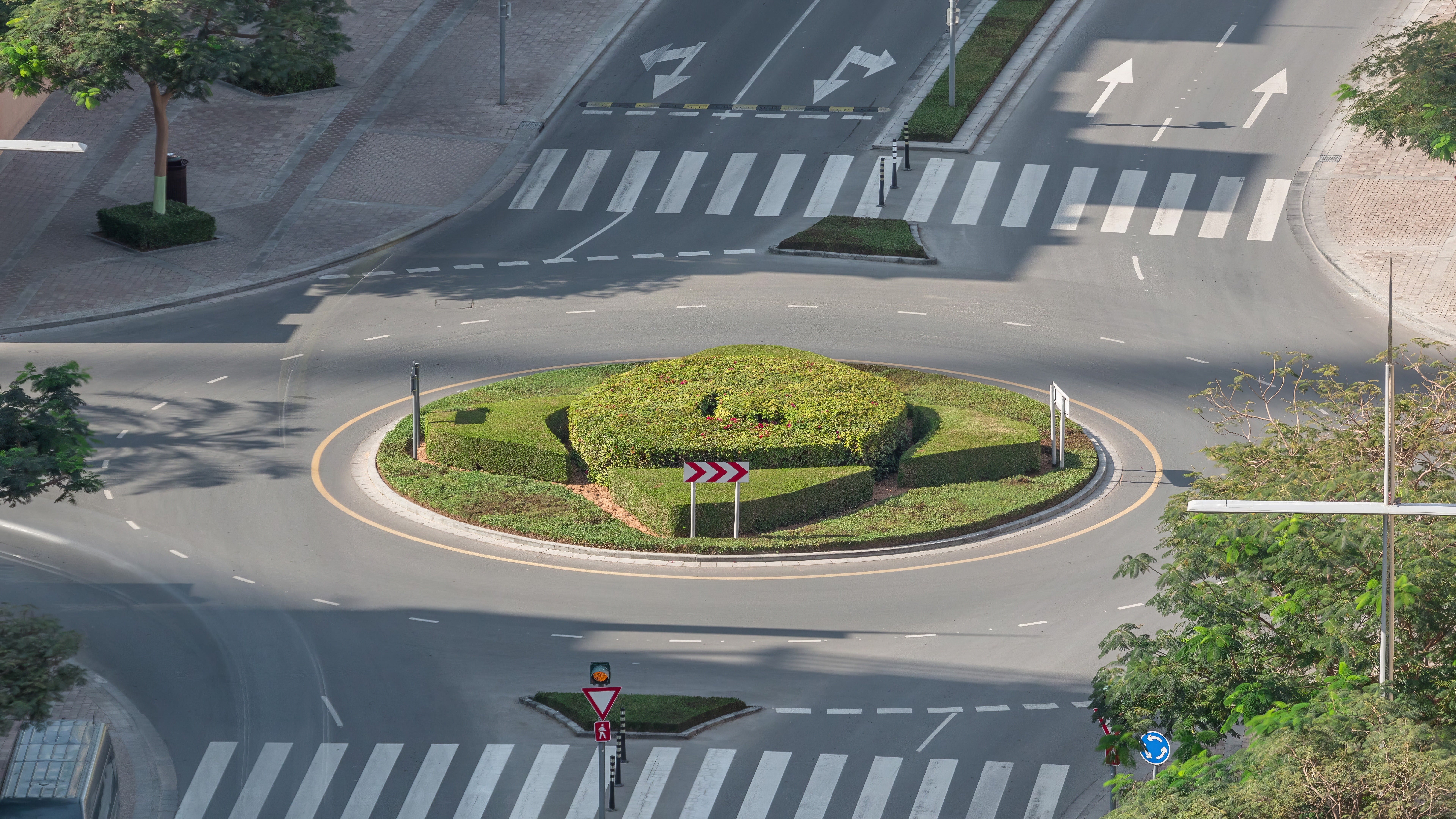
Across many U.S. cities, critical safety projects—such as installing roundabouts at high-risk intersections or adding bike lanes—stalled due to community objections, interagency disagreements, and political hesitancy. As a result, multiple deaths occurred on dangerous roads and intersections awaiting long-delayed upgrades (Weiner et al. 2025).
6. Vision Zero works when fully implemented
Evidence from the United States and abroad shows that Vision Zero can succeed when backed by sustained political will, adequate financing, and enabling regulation, as follows:
New York City reduced pedestrian deaths from an average of 141 to 111 per year after lowering speed limits, expanding automated enforcement, redesigning high-injury corridors, and—most notably—restricting car access in parts of Lower Manhattan (NYC DOT 2023).
Hoboken, New Jersey achieved eight consecutive years without a traffic death by systematically redesigning intersections, improving visibility at crossings, and removing parking that blocked sightlines (City of Hoboken 2023).
In the European Union, road deaths have fallen by 25% since the adoption of a continent-wide Vision Zero framework, with more than 900 cities recording at least one year with zero fatalities (European Commission 2023).
Sweden, where Vision Zero originated, reduced pedestrian deaths by 65% and overall road fatalities by 60% through road redesign, strict speed management, investment in public transport, and strengthened vehicle-safety standards (Trafikverket 2020).
Lessons for Policymakers and International Development Institutions
Lesson 1. Strong Political Commitment and Financing at Scale Are Essential
Effective Vision Zero implementation requires political commitment and leadership, strong governance, and clear accountability structures. Cities must adopt formal policies and procedures, designate lead agencies for multi-department projects, complete planned actions on schedule and as budgeted, and maintain consistent traffic-safety enforcement to ensure system-wide impact.
Transformative and measurable improvements also depend on multiyear financing at scale, particularly for interventions that have the greatest effect on preventing deaths and serious injuries:
Redesign of high-risk arterial roads
Protected pedestrian and cycling facilities
Advanced speed-management technologies and traffic-calming measures
Automated and intelligent speed-enforcement systems
Without sustained political commitment and predictable financing, Vision Zero efforts risk remaining symbolic, fragmented, or stalled—falling short of the systemic changes required to save lives.
Lesson 2. Reform regulatory barriers
National and subnational law should:
Allow speed reductions
Support traffic safety enforcement by the police and enable automated enforcement
Prioritize vulnerable road users
Require evidence-based vehicle and infrastructure safety standards.
Without an enabling regulatory environment, Vision Zero remains aspirational.
Lesson 3. Proactively manage political resistance
City authorities must:
Communicate early and clearly on safety rationales
Use data to demonstrate risk and the effectiveness of proposed policies and measures
Build coalitions with health, education, and community groups
Maintain political resolve in the face of driver and other interest groups opposition.
Reversals undermine credibility and cost lives.
Lesson 4. Scale networks, not isolated pilots
Small projects have limited impact. Cities must address entire high-injury road networks, combined with maintenance, monitoring, and enforcement.
Lesson 5. Integrate road safety into public health, equity, and climate agendas
Road safety is fundamental to broader development outcomes:
• Human capital development: Road traffic crashes disproportionately affect working-age adults, especially those between 15 and 49 years old, who represent the most productive segment of the labor force (WHO 2023). When people in these age groups are killed or suffer long-term disabilities, countries lose years of potential earnings, tax contributions, and economic output (World Bank 2024b). In LMICs, where social safety nets are weaker, these losses translate directly into household poverty, reduced schooling for children, heightened caregiving burdens, and irreversible setbacks to human-capital formation.
• Health-system efficiency: Road traffic injuries impose a major burden on already resource-constrained health systems (Marquez 2025a). In many LMICs, 30–50% of all surgical beds are occupied by crash victims, according to the Global Road Safety Facility (World Bank GRSF 2020). This high caseload severely limits hospital capacity for other urgent health needs—including maternal and child health services, chronic disease management, infectious disease outbreaks, and essential surgeries. Because trauma care for road injuries is resource-intensive, hospitals must divert scarce personnel, emergency-room capacity, imaging services, and blood supplies to manage preventable crashes. This creates crowding and delays that affect all patients, not just those injured in crashes. In addition, long-term rehabilitation needs for crash survivors—many of whom sustain life-altering orthopedic or neurological impairments—further strain health systems that often lack adequate rehabilitation services. Preventing crashes therefore yields direct health-system gains: reducing emergency admissions, lowering surgical loads, freeing critical-care beds, and allowing health workers to redirect their time and resources toward other priority health challenges. This makes road safety an essential component of universal health coverage (UHC), health-system resilience, and efficient use of limited public health resources in LMICs.
• Gender equality: Women and girls are disproportionately affected by unsafe mobility environments, as they rely more on walking, public transport, and caregiving-related travel (Dominguez et al 2024). Unsafe streets limit their access to education, jobs, and evening activities. Road injuries often push households into poverty, increasing unpaid care burdens for women. Improved road safety—well-lit streets, safer crossings, slower speeds—enhance women’s mobility, safety, and economic participation.
• Air quality and climate goals: Policies that reduce speeding, redesign streets, and expand public transport directly support climate and air-quality objectives (European Commission 2021). Traffic calming and complete-street designs encourage walking, cycling, and transit use. Lower speeds and smoother traffic flows reduce fuel consumption and emissions. Safe routes for active mobility reduce car dependence, contributing to health improvements and the achievement of other global development targets. Cities implementing Vision Zero in Europe have recorded dual gains: fewer deaths and meaningful emissions reductions (European Commission 2021).
• Safe access to jobs, schools, and essential services: Poor and marginalized communities often live near high-speed roads with no sidewalks (World Bank 2024a). Improving safety on these corridors enhances equitable access to employment, education, health facilities, and markets. Children especially benefit since safe crossings and traffic-calmed school zones reduce injuries and improve school attendance. Safe mobility is a precondition for inclusive economic growth, urban productivity, and social inclusion.
6. Recognize the Human Cost of Delay
Road traffic crashes are predictable and preventable system failures—not random events. Fatalities cluster on dangerous corridors lacking sidewalks, crosswalks, traffic calming, or safe transit access. Delayed upgrades cost lives.
The responsibility lies with systems, policies, and leadership, not individual road users (WHO 2023). Each year of inaction deepens the burden on families, communities, and health systems. As such, policy failures and inaction—not individual behavior—remain the primary drivers of roadway deaths.
Integrating road safety action into broader development and climate investments have the potential to strengthen the impact of World Bank Group and other development institutions–supported projects across transport, health, education, and social protection sectors (Marquez 2025b).
Takeaway
The U.S. experience demonstrates that Vision Zero cannot succeed as a slogan or a symbolic commitment. It will succeed when backed by sustained political leadership, strong institutional coordination, effective implementation management and accountability, adequate and predictable funding, enabling regulatory reforms, and comprehensive redesign of roads and streets.
The message should be clear to all: Zero traffic deaths is an achievable goal—but only when leaders make it a priority and sustain the policies, investments, and institutional reforms needed to deliver lasting results.
Source of Image: Shutterstack Asset id: 2530945387
Source of Image: Shutterstack Asset id: 2453407367
References
Bose, D, Marquez, PV. 2018. The High Toll of Traffic Injuries: Unacceptable and Preventable. Washington, DC: World Bank Group.
https://documents.worldbank.org/en/publication/documents-reports/documentdetail/374881515180592957/the-high-toll-of-traffic-injuries-unacceptable-and-preventable
California Legislature. 2021. Assembly Bill 43 – Speed Safety Reform. Bill Text - AB-43 Traffic safety. https://leginfo.legislature.ca.gov/faces/billTextClient.xhtml?bill_id=202120220AB43
City of Hoboken. 2023. Vision Zero Annual Report.
https://www.hobokennj.gov/resources/vision-zero
City of Los Angeles. 2024. Audit of the Vision Zero Program.
https://controller.lacity.gov/reports
Dominguez Gonzalez, K; Kurshitashvili, N; Gonzalez Carvajal, K; Pickup, L. 2023. Closing Gender Gaps in Transport. World Bank Group Gender Thematic Policy Notes Series: Evidence and Practice Note. Washington, D.C.: World Bank. https://openknowledge.worldbank.org/handle/10986/40850
Duncan, I, Martinez, E, and Moriarty, D. 2025. “The deadliest roads in America”. The Washington Post, November 19, 2025. https://www.washingtonpost.com/business/interactive/2025/pedestrian-deaths-surge-road-safety/
European Commission 2021. EU Road Safety Policy Framework 2021–2030. https://eur-lex.europa.eu/legal-content/EN/TXT/PDF/?uri=CELEX%3A52021IP0407
Fonseca, K. 2025. “An audit of L.A.’s program to fix deadly streets outlines its many failures”. Los Angeles Times, April 18, 2025. https://www.latimes.com/california/newsletter/2025-04-18/an-audit-of-l-a-s-program-to-fix-deadly-streets-outlines-its-many-failures-essential-california
Global Road Safety Facility. 2025. “The Global Road Safety Facility (GRSF) is a multi-donor trust fund managed by the World Bank that supports efforts in low and middle-income countries to halve their road traffic fatalities and serious injuries”. https://www.globalroadsafetyfacility.org/
Marquez, PV. 2025a. “Improving Road Safety: The Critical Role of Post-Crash Care in Saving Lives and Preventing Serious Disability”. Substack Post February 23, 2025. https://pmarquez.substack.com/p/improving-road-safety-the-critical
Marquez, PV. 2025b. “After Marrakech Global Ministerial Conference on Road Safety: How Health Sector Interventions Can Contribute to Safer Roads?”. Substack Post February 23, 2025. https://pmarquez.substack.com/p/after-marrakech-global-ministerial
National Highway Traffic Safety Administration (NHTSA). 2024. Traffic Safety Facts.
https://www.nhtsa.gov/
NYC Department of Transportation. 2023. Vision Zero Progress Report.
https://www.nyc.gov/html/dot/html/visionzero/
Trafikverket (Swedish Transport Administration). 2020. Vision Zero: From Concept to Implementation. https://www.trafikverket.se/en/startpage/
U.S. Department of Transportation (USDOT). 2016. Road to Zero Coalition Launch. https://www.transportation.gov/briefing-room/us-dot-national-safety-council-launch-road-zero-coalition-end-roadway-fatalities
U.S. Department of Transportation (USDOT). 2022. Safe Streets and Roads for All Program. https://www.transportation.gov/grants/ss4a
Weiner, R., Duncan, I., Martinez, E., & Moriarty, D. 2025. “America’s plan to protect pedestrians failed”. The Washington Post, December 4, 2025. https://www.washingtonpost.com/
World Health Organization (WHO). 2022. Road Traffic Injuries: Key Facts.
https://www.who.int/news-room/fact-sheets/detail/road-traffic-injuries
World Health Organization (WHO). 2023. Global Status Report on Road Safety 2023. Geneva: WHO. https://iris.who.int/bitstream/handle/10665/375016/9789240086517-eng.pdf?sequence=1
Turner, B., Job, S. and Mitra, S. 2021. Guide for Road Safety Interventions: Evidence of What Works and What Does Not Work. Washington, DC.: World Bank. https://www.globalroadsafetyfacility.org/publications/guide-road-safety-interventions-evidence-what-works-and-what-does-not-work
World Bank. 2023. Global Road Safety Facility (GRSF) Annual Report 2023. Washington, D.C.: World Bank. http://documents.worldbank.org/curated/en/099634305072412983
World Bank Group. 2024a. “Promoting Livable Cities by Investing in Urban Mobility”. Washington, D.C.: World Bank Group. Results Briefs March 14, 2024. https://www.worldbank.org/en/results/2024/03/13/promoting-livable-cities-by-investing-in-urban-mobility
World Bank Group. 2024b. “A Decade of Saving Lives Through Road Safety Investments”. Results BriefsMarch 25, 2024. Results Briefs. Washington, D.C.: World Bank Group. https://www.worldbank.org/en/results/2024/03/25/a-decade-of-saving-lives-through-road-safety-investments?cid=SHR_SiteEmailShare_EN_EXT